A homily for the Thirty-Second Sunday in Ordinary Time, November 8, 2026
Wisdom 6:12-16, 1 Thessalonians 4:13-18, Matthew 25:1-13
We look for hope and joy in these days of weaponized fear. And we find them in our faith and in each other.
A homily for the Thirtieth Sunday in Ordinary Time, October 25, 2026
Exodus 22:20-26, 1 Thessalonians 1:5c-10, Matthew 22:34-40
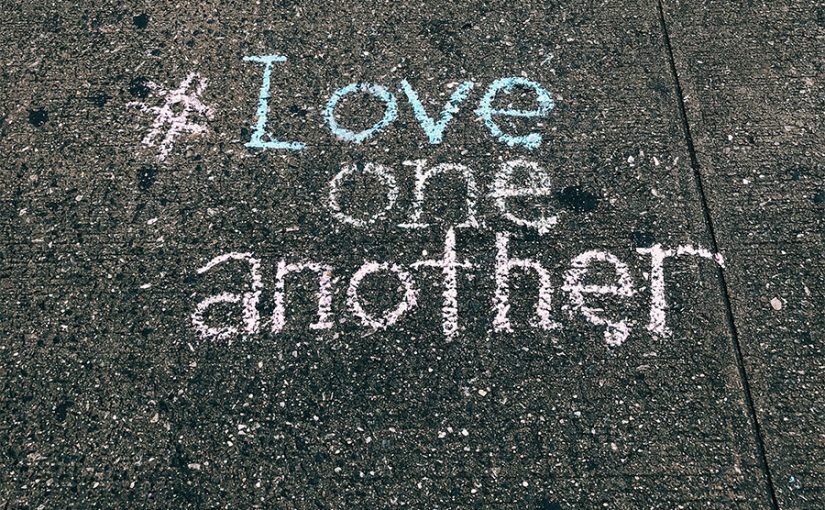
What is Love?
At this very moment, there are about 6.8 billion-with-a-B answers to that question. And all of them are correct, at least to a degree.
What is Love?
A homily for the Twenty-Eighth Sunday in Ordinary Time, October 11, 2026
Isaiah 25:6-10a, Philippians 4:12-14, 19-20, Matthew 22:1-14
I wanted a dark-blue car. I would have been happy with a British-racing-green one or a candy-apple-red one, and I’ve owned black ones. But to have the interior I wanted, I bought a white car. Not since I was 17 and somewhat unsuccessfully restored a 1961 Ford Fairlane coupe have I owned a white car.
But every vehicle I’ve ever chosen has had the interior I wanted. And this snowball-colored rig is no different.
Because we use our cars from the inside.
Sure, we admire their shapes and finishes — Ain’t she a beaut! Look at those curves! — but we drive them or ride in them in them. The mechanical stuff that makes them go is in them.
It’s what’s inside that counts (I’ve heard that a few times). You can’t judge a book by its cover (ditto).
So when we hear today’s Gospel from Matthew, we may be tempted to gloss over the many deeper layers of its message.
A homily for the Twenty-Seventh Sunday in Ordinary Time, October 4, 2026 (but mostly to wrap up the Season of Creation)
Isaiah 5:1-7, Philippians 4:6-9, Matthew 21:33-43
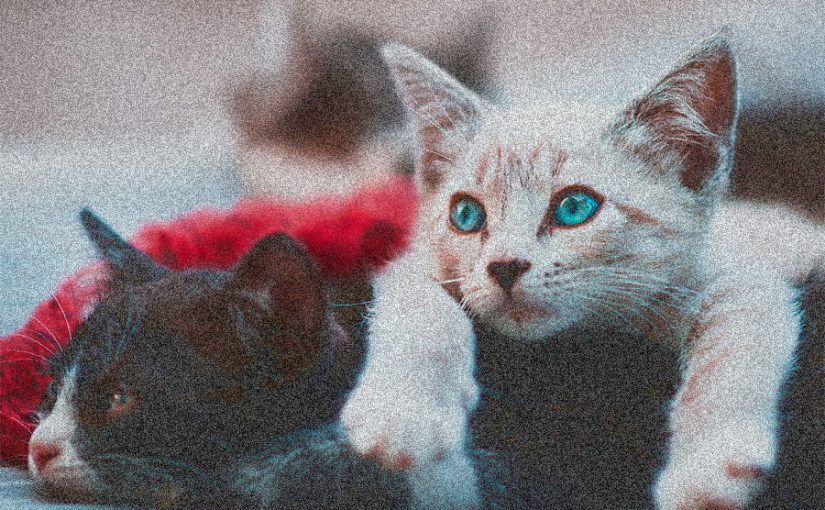
Important information to start: The kittens in the photo are not our cats. I don’t have a group shot of our three, with their vastly divergent personalities. We’ll discuss them shortly.
Also important: Today’s passages from Scripture remind us that inviting our sisters and brothers to a closer relationship with our Creator God is a career, not a job; a marathon, not a sprint. And every single one of us is called to that vocation, using all of our unique God-given skills and talents and creativity to succeed.
Now, here’s the main Big Deal, since we’re speaking of our Creator God:
A homily for the Twenty-Sixth Sunday in Ordinary Time, September 27, 2026
Ezekiel 18:25-28, Philippians 2:1-11, Matthew 21:28-32
Sir Isaac Newton’s Third Law of Motion states that for every action, there is an equal and opposite reaction.
Or, in the case of youngsters and other immature people, every action that somebody considers unfair is met with a double dose of pouting and stamping feet.
But what’s most unfair is how some of us view fairness.
A homily for the Twenty-Fifth Sunday in Ordinary Time, September 20, 2026
Isaiah 55:6-9, Philippians 1:20c-24, 27a, Matthew 20:1-16a
We’re not always great at reading people’s minds. We miss the cues: the body language, the facial expressions, the eye contact or lack thereof, the tone of voice.
Sometimes someone has to flat-out say it: “Read my lips. No new taxes.” And even then, the message doesn’t always sink in.
All of us are unique, and that means each of us sees and understands life through a unique lens, a unique perspective, filtered through unique memories and experiences that shape that point of view. We may have much in common, but not everything.
Some of us have nothing in common. That’s a fact of life on this big blue marble we call Earth.
So we spend our lives trying to fathom everything around us and within us, and straining to help others to tune into what we see, feel, and think. Our success rates vary.
Then there’s the Mind of God.
A homily for the Twenty-Fourth Sunday in Ordinary Time, September 13, 2026
Sirach 27:30—28:7, Romans 14:7-9, Matthew 18:21-35
Please also see my reflections on 25 years after 9/11/2001
Today’s Scripture passages prove there are no coincidences with God. If ever the three-year cycle of readings just happened to mesh perfectly with world or national events, this is it.
Today, we hear of unity as children of God, and of the power of and necessity for forgiveness.
Forgiveness…
No homily for the Twenty-First Sunday in Ordinary Time, August 23, 2026
Isaiah 22:19-23, Romans 11:33-36, Matthew 16:13-20
When I was in formation to become a deacon, our mentors repeated early and often that, after God, family comes first. The families we’re born into, and the families we assemble as we journey through this life and the next.
This weekend, my family has come first.
Today’s passages from Scripture, fortunately, are profound, with self-evident messages.
I’ll be back next week (is that a promise or a threat?).
A homily (sort of) for the Twentieth Sunday in Ordinary Time, August 16, 2026
Isaiah 56:1, 6-7, Romans 11:13-15, 29-32, Matthew 15:21-28
I have a confession to make. Two, actually.
First, this may qualify more as a sermon or as a ponderance or as a freestanding prayer than as a homily for this weekend. I’m sharing what I remember of what I hope was a meaningful contribution to an ecumenical Day of Prayer, and these words may not be directly reflective of the Scripture passages cited in the links above.
Second confession: I failed Show and Tell.
Kindergarten, first grade, second … either I had an interesting item to show the class but no great story to tell, or I tried to hype a dull item with a fantastic story. I never found the balance way back then, which is why I never use props when I preach or lead prayers.
Except for today. Today, at the Tinton Falls Community Day of Prayer, I used a prop.
A homily for the Nineteenth Sunday in Ordinary Time, August 9, 2026
1 Kings 19:9a, 11-13a, Romans 9:1-5, Matthew 14:22-33
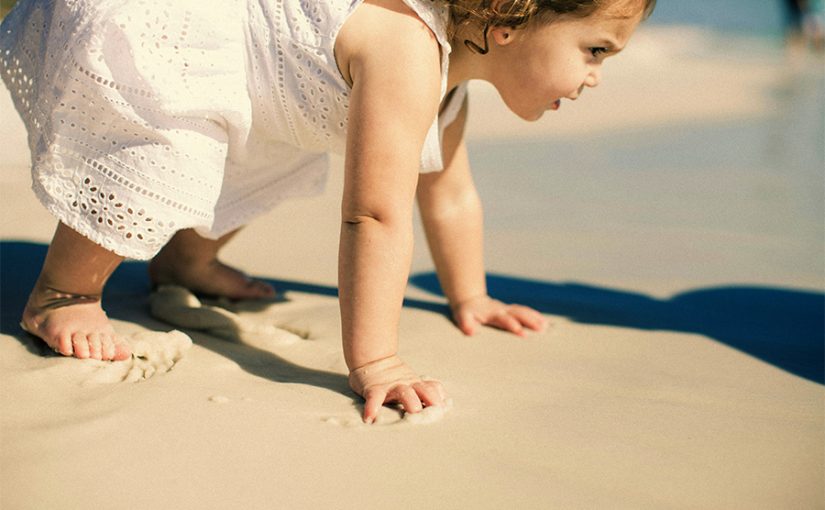
There’s a point in all children’s lives when they transform, butterfly-like, from babies to toddlers.
They haul themselves up, stand wobbily, and then … toddle. They walk. Not well at first, and not far, but they walk. They tumble, sometimes cry, then hoist themselves and set off again. And again.
And…
Again…
Walking evolves into running. Running morphs into dancing.
All this frenetic movement leads to exhausted, but proud, parents.