A homily for the Sixteenth Sunday in Ordinary Time, July 19, 2026
Wisdom 12:13, 16-19, Romans 8:26-27, Matthew 13:24-43
Some people can be fussy about what they eat and how. Some picky eaters insist that certain foods cannot touch other items on their plates. No gravy near their peas and carrots, no syrup near their eggs. And no pickles, ever.
Semi-fussy folks may eat one item at a time, clearing away the broccoli before the beef, even when they’ve been wokked together.
And there’s a good argument to be made for this: Individual flavors and textures deserve to be savored, remembered for their uniqueness.
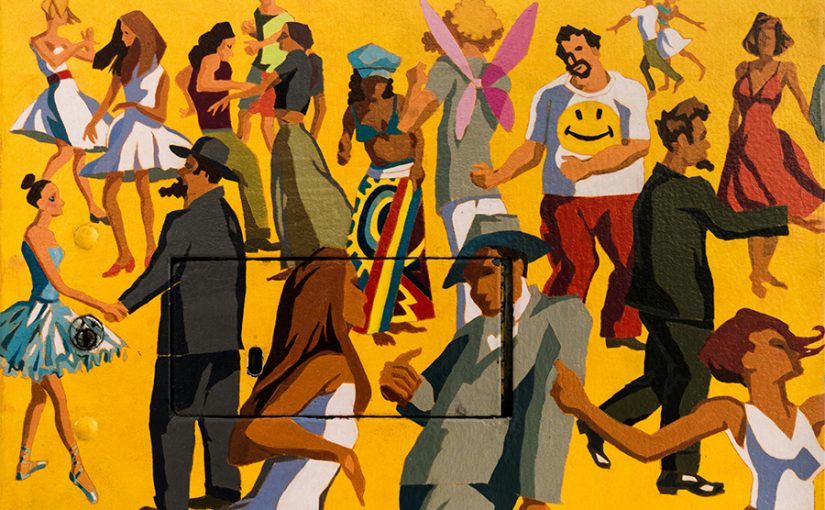
But we also know that great chefs devote immense and intense time and skill to craft recipes that pair complementary or contrasting ingredients to create something new, fascinating and even more memorable than Harvard beets. A concoction to be experienced in its entirety, a whole that is greater than the sum of its parts.
God is the greatest chef of all.
We know God’s recipe as Creation, of which humankind is a significant — a dominant — part. (But not the only part, by far.)
We know God’s Creation through several labels:
Jigsaw puzzle.
Tapestry.
Melting pot.
Mulligatawny stew.
Race, color, creed, ethnicity, language, politics.
Us.
Them.
Dear God, not THEM.
So when we think about it, don’t we sometimes treat some of our fellow humans like gherkin juice invading our sweet potato fries?
Now, everyone is entitled to spend time and connect with people they have an affinity for. Like minds seek out like minds — artists, athletes, actors, musicians, politicians, plumbers and skilled tradespeople, teachers — and we celebrate our friends and families of choice. They are gifts from God.
But so are the rest of the 8.3 billion of us, all jammed onto this tiny blue marble, competing for life’s bare necessities amid wars, famines, vast economic inequality, rampant corruption and injustice, and downright ignorance.
Every child of God in every corner of the world (Hmmm … how did a globe get corners? I digress…) every child of God in every corner of the world has something to offer. An interesting idea, regardless of whether we agree. A different perspective, because no two people are in the same place at the same time. A different experience of life, shaped by gender, environment and countless other factors — many or most of which we’ll never experience ourselves. Because they are who they are and we are who we are.
Everyone has a right to be here and has a right to be who they are. We can’t claim those rights only for ourselves.
Today’s passage from the aptly named Book of Wisdom, compiled about 2,200 years ago, clearly and powerfully pairs justice and kindness.
Purported justice without kindness verges on revenge that far exceeds an eye for an eye (which itself is a weak check on a primitive instinct). Purported kindness without actual justice adds up to special treatment for some people, usually at the expense of others. Kindness plus justice is never a zero sum.
We Americans are spending a lot of time this year celebrating the truths written into the Declaration of Independence, a declaration of war that correctly cited England’s restrictions on God-given human rights as the reason the colonists intended to go their own way,
There is no doubt, no argument that those truths are rooted deeper than any seed any of Jesus’s parables’ sowers ever planted.
Likewise, there is no doubt, no argument that those truths about our being created in God’s image and likeness, and thus our being infused with rights and responsibilities, continue to grow in different environments. In good soil, in gardens amid weeds or thorns, in the desert or a floodplain.
To this very day.
In all of human experience, even now, Divine Truth is aspirational, because we humans just ain’t all that divine.
But we are a fascinating stew.
Each of us knows how best we relate to other people and to all of Creation. Introverts, extroverts, otroverts, climate crusaders, maybe a little wasteful.
Each of us has the opportunity and the skills to grow, should we choose to do so. With God’s grace, we can meet and greet our sisters and brothers and distant cousins where they are and appreciate who they are.
We can learn from what they know and, with humility, share what we’ve learned individually and as a community. Because there’s so, so much we just plain do not know. That we ought to know. That we ought to ponder. That we ought to add to our lives and institutions.
With God’s grace, we can recognize the complementary and contrasting elements of God’s recipe — us and, yes, them — and we can help mix and blend them, to be a little spicy or fairly bland.
With God’s grace, we’ll realize we’re all in the same cauldron together.
