A homily for the Fifteenth Sunday in Ordinary Time, July 12, 2026
Isaiah 55:10-11, Romans 8:18-23, Matthew 13:1-23
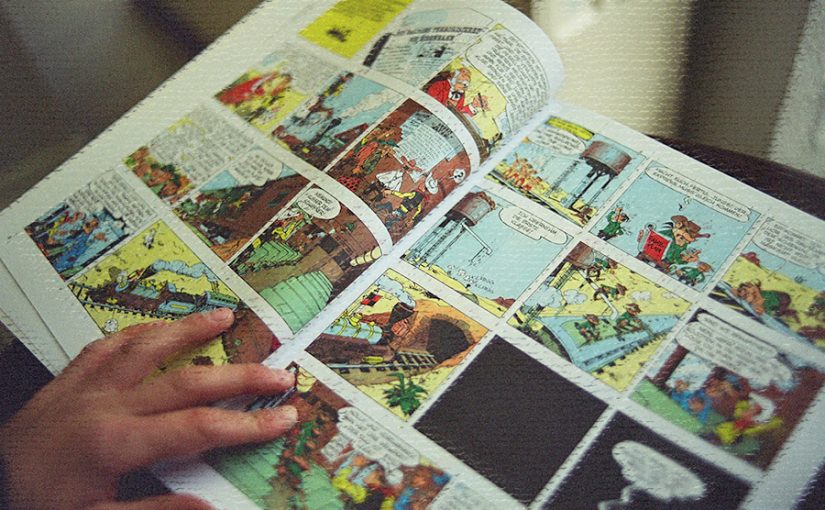
We don’t often see the parallels between stained-glass windows and comic books/graphic novels. And Dr. Seuss and Scripture? Sam, I am not seeing it.
We accept the notion that the Psalms are poetry, but we don’t hear King David gently rapping, rapping at my chamber door. No, nevermore.
God stuff? Church-y stuff? Regular people stuff? Do they, can they really mix? Can they blend smoothly into a unified way of life?
Jesus thought so (and still does).
From today’s Gospel passage:
This is why I speak to them in parables, because they look but do not see and hear but do not listen or understand.
People who speak in parables or write about Thing One and Thing Two…
Artisans who craft stained glass or artists who ink and color comic books…
Their stories arrive on several levels.
The first is the tale itself, with familiar settings and relatable characters. True: Some of the parables relayed through the Gospels struck a chord more vividly for first-century Middle Eastern sheepherders than for us 21st-century Westerners. But we can use our knowledge of history to put ourselves in their sandals.
Some of the Bible stories depicted in colored glass likewise have that all-too-old-timey feel to them. And we get lost in the artwork and the tinted sunlight, dazzled by the halos and glistening robes, carried away by the ooh and aah aspects of the works.
But in the next level of the message, we scale up from ooh and aah to aha.
To “Oh, wait, now I get it.”
To “Oh, wow, that could be me he’s talking about. Oh, wow, that is me.”
Relatable becomes revealing.
There’s truth in every message contained in the Scriptures: big truth, little truth, no-duh truth. Truth about love, justice, holiness, fairness, justice, our kinship with every person alive now, then or future. About justice.
Some truths sneak up on us, especially when they’re God’s whisperings competing for our attention in this screen-obsessed world. Other truths — often, the big ones — whack us upside our heads through natural disasters or human violence.
All truth, told through whatever media we most relate to, calls us first to try to comprehend its magnitude. How big is this truth? How do we fit into the tapestry or jigsaw puzzle through which this truth is revealed?
What is this parable or graphic novel or documentary or religious TV series trying to tell us?
What is the aha?
(Cliché light bulbs over our heads…)
Ohhhh, that’s what they were trying to say.
Once we get it, once we see the dimensions and significance of this particular truth, the truth calls us to do something.
Almost always, truth’s first call is for us to spread it. To share the Good News. To share the Bad News. To prophesy. To speak truth to power.
Truth is not a secret to be kept.
And then there is the aha-aha.
We understand what needs fixing in our world and match our skills and intellects and personalities to the tasks at hand. There are many, and they are wide-ranging, from anger through hunger and thirst to xenophobia. Maybe something zoological or connecting via Zoom conference. Dunno.
Victims of earthquakes and floods need our help. Victims of famine and diseases need our help. Victims of wars and political persecution need our help.
Talk about whacks upside our heads…
Jesus decided that he needed to speak in parables because some people were missing the point of his plainspoken message of loving God, loving neighbor — including people considered enemies — and being good stewards of Creation.
Jesus chose parables because most of the time, they’re head-scratchers. People who heard them would walk away wondering, “What was that all about?” And they’d keep wondering. The message itself would really bug them until they caught its meaning.
Yes, parables and stained glass and “Maus” and protest songs can get under our skin or stuck in our heads. Their messages live in us a lot longer than any simple-though-profound command we give lip service to.
One other key aspect of these truth-delivering methods: Parables and cats in hats and Bayeux Tapestries compel us to stop and think.
Stop.
Shut out the noise.
Walk away, literally or figuratively, from the hurly-burly.
Think and ponder.
Be amazed. Be grateful.
Maybe pray a little.
Breathe.
Truth-telling media have that kind of power, whatever medium speaks to us best.
