A homily for the Twenty-Eighth Sunday in Ordinary Time, October 11, 2026
Isaiah 25:6-10a, Philippians 4:12-14, 19-20, Matthew 22:1-14
I wanted a dark-blue car. I would have been happy with a British-racing-green one or a candy-apple-red one, and I’ve owned black ones. But to have the interior I wanted, I bought a white car. Not since I was 17 and somewhat unsuccessfully restored a 1961 Ford Fairlane coupe have I owned a white car.
But every vehicle I’ve ever chosen has had the interior I wanted. And this snowball-colored rig is no different.
Because we use our cars from the inside.
Sure, we admire their shapes and finishes — Ain’t she a beaut! Look at those curves! — but we drive them or ride in them in them. The mechanical stuff that makes them go is in them.
It’s what’s inside that counts (I’ve heard that a few times). You can’t judge a book by its cover (ditto).
So when we hear today’s Gospel from Matthew, we may be tempted to gloss over the many deeper layers of its message.
Now, it’s a safe and valuable interpretation of the Parable of the Wedding Feast that we should always be ready and eager to see the face of God, that we should keep ourselves on straight paths, that we should live with our souls figuratively dressed for the greatest banquet of all, in the eternal presence of our Creator.
That’s the correct interior monologue: Be ready, for we never know the time or place, etc.
So far, so good. But so far, it’s all about us, all about me. So far, our interpretation of the parable depends heavily on who we see in the mirror. And yes, we should vigorously maintain our relationships with Father, Son, and Holy Spirit.
But far more than that, we need to look through the window — or windshield as we pass a crowd — instead of gazing at our reflections.
In our world, in our nation, in our backyards are people we probably wouldn’t invite to a party. On first glance, anyway. And it’s perfectly OK to assemble our families and friends according to our likes and dislikes, according to what we have in common and the indefinable but palpable chemistry that binds us. The love we share is most intense that way.
Inclusion is a blessing, a gift.
It’s sheer joy to be part of a group, to be welcome, to be embraced, to be warm, to be at home.
However…
It’s utter sadness and frustration to be the last kid chosen for kickball, or to be parked on the sidelines. Any sidelines.
Exclusion is a sin, an abomination.
(Wow, I don’t think I’ve used that word in a long time.)
And how often do we exclude based on first glance? On first sniff or sound or even vibe? How often do we run based on some prehistoric evolutionary fight-or-flight survival instinct run amok?
Whose presence are we missing in our lives?
The answer is in Matthew’s Chapter 25 (today, we’re in Chapter 22).
In Chapter 25, Matthew lets Jesus remind us that the poorest among us, the most marginalized among us, the most persecuted among us — and, yes, they are right in the middle of everywhere we are — all those people are Christ among us.
Are we excluding Christ?
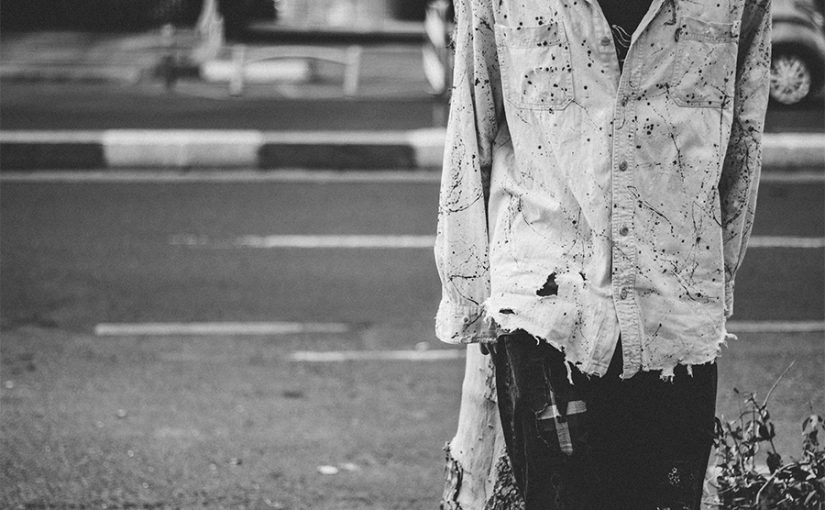
Are we missing out on meeting and getting to know people — our sisters and brothers; check the DNA results — because of their seemingly shabby clothes, their rusty cars or trucks, their jobs, their spoken language, their skin and hair?
Are we not experiencing who they are, deep down, and thereby depriving ourselves of adding their essence to our own? Of adding them to our extended chosen families? (See, it can be all about us if we want.)
Have we forgotten that it’s what’s inside that counts? (I thought it was worth repeating.)
Are we excluding Christ?
Let’s not. Everyone deserves a seat at the table, because it’s God’s table.
