A little over 45 years ago, I stood in the living room of my college advisor, a beautifully wild man with wild hair and a creative spirit that had lit a fire in me and under me.
I was helping him pack.
He had not been granted tenure, and his contract was up, so he and his young family were heading out to his wife’s family home to work on their next steps.
It was, I recall him saying, the first time in 32 years that he would not be going back to school on Labor Day.
Have you ever asked for something? Asked Mom or Dad or Uncle Mike or Santa Claus or the Easter Bunny?
Did you get it? After you got it, was it really what you wanted? And even if you thought it was, did you get tired of it after a while? Or, after a long while, did you realize that, no, it really wasn’t what you wanted after all?
Crabgrass. Goosegrass. Chickweed. Dandelions. Clover. Those tall spiky things with the leaves every two inches up the stem: Whatever they are.
For those of us with lawns, keeping weeds under control can be a never-ending struggle. Because, at best, we control weeds. We never defeat them. They’re stubborn and invasive and pervasive.
One weed becomes two becomes four becomes 16 becomes 256 becomes a math problem and that’s less fun than the weeds themselves. If only we can rid our lawns of that first one, we’ll be spared the outbreak. But how often does that happen?
Back in the days of “Children should be seen and not heard” and “Because I said so,” Mom always justified those neanderthal rules with so-called “biological math”:
“You have two eyes and two ears but only one mouth. Which do you think are more important?”
And she, like all mothers, made a good point. If we don’t see and hear, if we don’t watch and listen, we don’t learn. If we don’t learn, we live in the dark.
It’s officially summer. It’s Father’s Day. The Church has returned — for a long stretch — to Ordinary Time, a quieter time in the liturgical calendar. The green vestments are back indoors, just as green leaves are back outdoors. (The pollen too, but oh well.)
All’s right with the world. There’s joy in Heaven and on Earth.
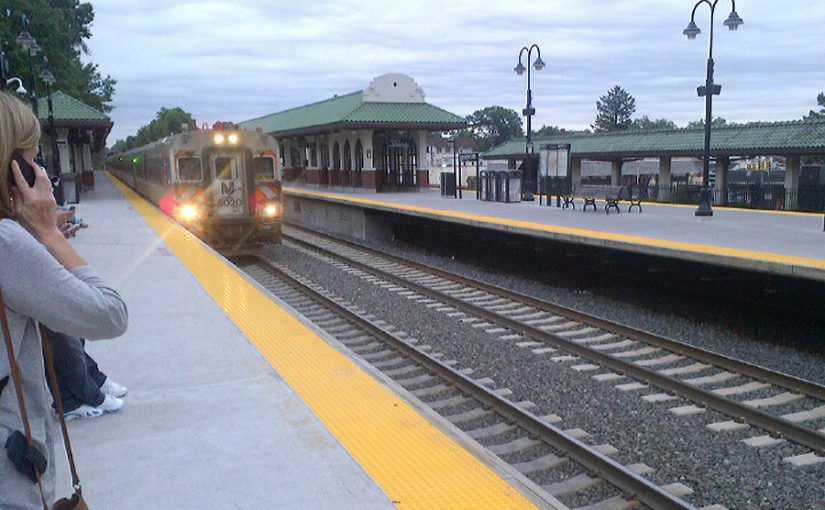
When it became clear, two or three months or so ago, that the novel coronavirus was becoming dangerous, then really dangerous, then life-threatening, most of us bugged out à la M*A*S*H from our places of work or school. Quickly. Messily.
Very quickly. Very messily.
We grabbed the essentials to continue as essential workers; we powered down everything else; we scooted out of wherever with barely a “See ya” or a “Take care.”
Unlike mobile Army surgical hospitals, we never had bug-out drills. We never practiced shutting it all down and setting it all up somewhere else. We exited without a playbook, making it up as we went along. Some things we got right. Too many things, we got wrong.
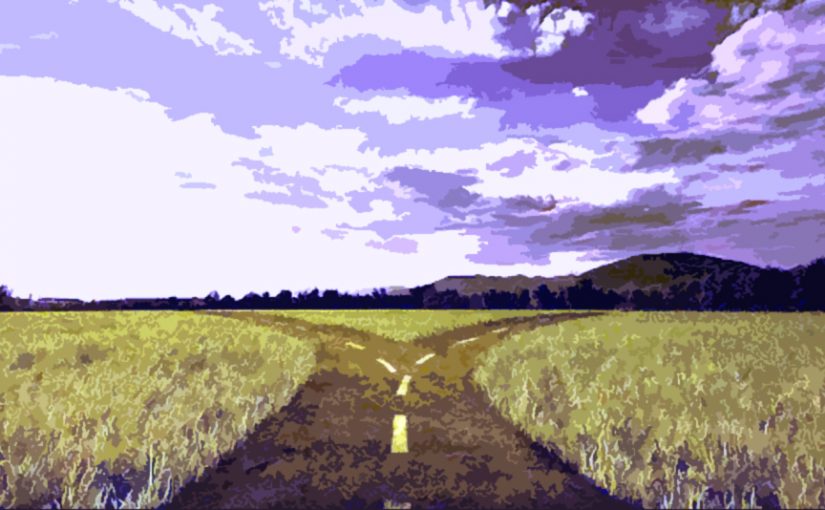
The story of the Road to Emmaus is profound and iconic. For anyone who believes in the living God, who wants to see the face of Jesus, who wonders if Jesus is always beside them — he is — the notion of hearts ablaze with love and desire for the Lord is immediately relatable.
We know that Jesus is present in the breaking of the bread. That when two or more are gathered in his name, he is there. In Luke’s account, two men are discussing the events surrounding the crucifixion and Resurrection — thus, two gathered in Jesus’ name — and he joined them and became known to them as he broke the bread. As he said he would.
And then Jesus left them, but not really, because he has never, will never leave any of us.
Beautiful. Rich with make-you-think meaning and symbolism. And kinda neat and tidy, wrapped up and tied with a bow.
So much, in fact, it’s almost a fool’s errand to preach about this Gospel, because it takes little explanation and even less pondering to find the rich meaning in it.
So what else can we take away beyond the familiar?
Well, the Road to Emmaus is a rare Gospel in that its strong call to action is spiritual, personal and individual: Each of us is called to renew our relationship with Jesus and to seek him in every place he can be found. In this Gospel, there’s no call for us to serve the least among us, as Luke will provide in the next chapter. There’s no urging for us to become fishers of men, to go and spread the Good News.
No, on this road we’re asked to keep our eyes open for a divine traveling companion.
But beware of highway hypnosis.
As we deepen our bond with Almighty God into a mature relationship, it becomes easier and easier, it becomes more commonplace to know where to find Jesus, and to do it.
For starters, we find Christ in everyone we meet, six feet apart or otherwise.
After a while, though, doing things that have become easy and commonplace slips into the realm of rote and robotic. We might as well be doing them in our sleep.
Which doesn’t sound like our hearts were burning. It doesn’t sound like something Jesus would want.
It’s human nature, though, to stay in our comfort zones, to settle for Pizza Hut and McDonald’s because they’re consistent even if they’re not great (far from it). It’s human nature to rely on habit or even instinct when the goal is familiar.
But what if it weren’t?
Think for a second about how Luke describes what happened after Jesus broke the bread:
“With that their eyes were opened and they recognized him.”
When was the last time you had a truly eye-opening experience?
More importantly, when was the last time you allowed yourself to have an eye-opening experience? To be surprised or even a little startled?
We play some version of peekaboo with babies, then ease them into jack-in-the-boxes, piñatas, and graduate to haunted houses and hay rides and Great Adventure’s Fright Fest. We try out the newest daredevil roller coaster to get our hearts pounding on the next unexpected switchback.
And then — thud! — we grow out of it.
Maybe we don’t need Kingda Ka anymore, but we still need the capacity to be awed.
By all means, seek the Lord where he may be found, and call to him while he is still near.
But seek the Lord where you don’t expect to find him.
In a sunrise, a sunset, a thunderstorm, a gentle breeze. In the “burr-dee, burr-dee, burr-dee” call of a cardinal to his mate. In the fragrance of a hyacinth. In the cold and wet of dewy grass on bare feet. In a blinding sunbeam that sets your face aglow.
That can set your heart ablaze.
On the Road to Emmaus, when a figurative or literal grasshopper jumps at you from out of nowhere, and you feel that adrenaline rush, thank your Creator for your life, thank your Messiah for saving it and thank the Spirit for the wisdom and grace to recognize our Triune God in everything.
Welcome the surprise. Come back to life, heart ablaze, because of it. Because of Christ within it.