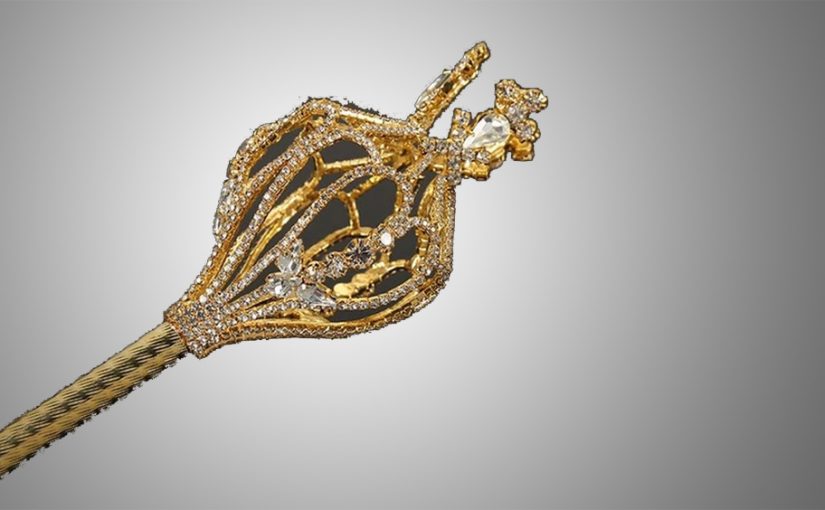
Who IS this guy?

A homily for Palm Sunday of the Lord’s Passion, April 5, 2020

Matthew 21:1-11, Isaiah 50:4-7, Philip 2:6-11, Matthew 26:14 to 27:66

Let’s start cinematically and theatrically, comedy film first. Yes, it’s appropriate on this day when we hear of agony and sacrifice.

At the start of “Ghostbusters II,” Ray and Winston are on a mission, specter-bustin’ gear at the ready, and when they confer with their client, she tells them there are a whole bunch of them, and they’re rowdy. The two Ghostbusters blast through the kitchen door into a room full of shrieking birthday party kids, one of whom disappointedly groans, “I thought it was going to be He-Man!”

As Ray and Winston sing their theme song, they’re crestfallen when they get to the line, “And it don’t look good.”

Nope, it don’t.

In the rock opera “Jesus Christ Superstar,” a massive crowd accompanies Jesus into Jerusalem, singing “Hosanna, Hey Sanna, Sanna Sanna Ho,” praising him as all right by them, but then asking Jesus to die for them and, as the Gospel of the Passion tells us, eventually turning away from Jesus and throwing him to the Sanhedrin and the Roman executioners.

Jesus had been preaching true peace and true love for three years all over the Promised Land. He healed bodies; he healed minds; he healed souls. He acted nonviolently, patiently and selflessly, and his rare flashes of anger were always justified and just.

His fame — or, to the authorities’ point of view, infamy — almost always preceded him.

Simply put, the people of Israel knew him, or at least knew of him, knew something about him.

Well, they thought they did.

So why, and how, did they go from “Hail conquering hero” to “Crucify him! Crucify him!” in a handful of days?

They were expecting He-Man. (Please forgive my flippancy.)

When they got the true, essential Jesus, it didn’t look good. For him. For their selfish selves.

The Passion of Our Lord Jesus Christ, proclaimed this Palm Sunday and again on Good Friday, is historical, theological, philosophical and psychological. We can — we should — ponder all year, every day of the year, what Christ’s sacrifice means to us two millennia later. And if that’s what you take away from the Passion, you’re on solid ground.

And if you stop reading/listening now, you are blessed. It’s all fine by me.

But let’s get back to cartoon heroes and superstars for a second, because there’s an interwoven message I believe we can carry forward.

When the people of Jerusalem encountered Jesus, they had certain expectations. If Jesus was the Messiah that God had promised them, what would Jesus do? Would he be the greatest military leader in Middle Eastern history? Would he rally the people to overthrow the Roman overlords? The numbers were in the Israelites’ favor, at least until Rome sent reinforcements: There were far more sons and daughters of Abraham than there were Roman soldiers, though the Romans were battle-hardened killing machines and might have prevailed. Which is why their legions were able to enforce the Pax Romana in all the lands they conquered. But if Jesus were a divinely sent Hammer of God, the wielder of the two-edged sword, those Romans’ reign could be over.

What would Jesus do? Would he call down fire and lightning and plagues and locusts from Heaven to drive out the Romans and their supposedly religious collaborators, the Hebrew hypocrites who called themselves the leaders of their people?

What would Jesus do???

Obviously, not what the people of Israel were expecting.

So they turned on him. Fake. Phony. Loser. Next!

Maybe what Jesus did — what Jesus does, what he would do — is not what we’re expecting, either, today, now, in our lives. In the lives of others. In the life of The Other.

But it should be, because of those three precious, sacred, productive years Jesus spent preaching and teaching and healing. Fortunately for us, a few people were taking notes during those lessons. We have our scriptural instruction manual. We have our Holy Spirit-guided consciences. We have each other.

As members of the Mystical Body of Christ, as Church for one another, and especially in these COVID-19 times, we carry a dual responsibility, a dual challenge.

We must be Christ to one another, to every person we encounter, albeit from six feet away or virtually.

And we must recognize Christ in every person we encounter, same rules apply.

So who are we expecting? And what can they expect from us?

It’s pretty simple, actually. And crystal-clear.

Who are we expecting? And what can they expect from us?

The everyday hero with unique talents our Creator formed in our mother’s womb. The everyday hero Jesus died and rose for. The everyday hero the Holy Spirit sustains with a flood of wisdom and grace.

Nothing more, and nothing less.

Bouncing back

A homily for the Fifth Sunday of Lent, March 29, 2020

Ezekiel 37:12-14, Romans 8:8-11, John 11:1-45

The story is so familiar that “Lazarus” is not only a name, it’s a descriptive term.

Any sort of resurrection through outside forces is called a Lazarus. Restore a Mustang II? You’ve done a Lazarus, and you probably call the car Lazarus from then on.

The 2015 sci-fi/horror flick “The Lazarus Effect” (which critics and audiences panned) was a Frankenstein-style resurrection story. And in semiconductors (computer chips), there’s a deeply scientific-y physics-y Lazarus effect that involves electrons.

Lazarus is a term. Lazarus is a name.

So, yes, the story of Lazarus of Bethany is widely known and still resonates. We all know the plot and the denouement. We all know the details. We all can recite them, and thank God for that.

In these days of extreme social distancing, when wakes and funerals are off-limits, when spending time with loved ones in their last moments is verboten, we all can identify with the most powerful two words in the New Testament, the dun-dun-dunnn moment in the Lazarus story:

Jesus wept.

Jesus felt such deep emotion that he was compelled to act, begging The Father to restore human life to his friend, and thereby restore hope and happiness to his other friends.

By his example, Jesus reminds us all that proper emotions that prompt us to act will, in most cases, prompt us to act in a proper way.

And the Gospels and the prophets map that way of action for us.

Lazarus, a friend but most importantly a disciple, also knew the way, for he had learned it directly from the Christ.

But then — tire screech sound — the story stops. Lazarus lives a bit longer, we assume, and goes about his daily affairs as before, we assume. Or does he?

The Gospels are silent. We got nuthin’. Lazarus on The Day After is a cipher.

So let’s take a leap of faith (see how I worked that in?) and say that Lazarus did not go back to his day job, that he became the walking was-dead example of Christ’s infinite love and power, and evangelized with the best of them. That when his time came again, for real, he died with a Heaven-worthy résumé and gave us a saintly example to follow.

Except, of course, there’s no chronicling of that example.

Sigh.

Yes, we all can recite the details, the who, what, when, where, how, and even a bit of the why of the Lazarus story right up through the untying of the burial wrappings and his nosh, but what about the What Next? What about the What Does It Mean for My Life?

In grand terms, our faith tells us this is a story about our shared salvation through the death and resurrection of Jesus Christ, foreshadowed by the original, biblical Lazarus event.

Deeply and profoundly true.

But closer to home, in more of a kitchen-table theology understanding, this is a story within the story, a fill-in-the-blanks story about second chances, and what we do with them.

Literature, movies and TV, even comic strips are awash in scenes where somebody is in absolutely dire straits, prays for help and bargains with God: “Get me out of this and I’ll never/always do/avoid that good thing/bad thing again.”

And, of course, the odds are better than 50-50 that if the person gets out of the jam, the promise to straighten up and fly right is the only thing that flies away.

With no Laz on the Day After details, we have to use that promise-breaker from pop culture as our example. S/he got a second chance and likely squandered it. Then, s/he probably got a second second chance, and a third second chance, and on and on.

Have we squandered any second chances? It is easy to do; too easy, frankly.

Most of the time, our second chances have nothing to do with dangling 1,000 feet above a canyon and everything to do with being forgiven by someone we’ve wronged. The perils we put ourselves into usually involve someone else, and often someone close to us personally or professionally.

It may be a misstep or faux pas, or it may be a major transgression.

We seek forgiveness and we get it. We get the precious second chance.

We must use it wisely.

We need to learn from our mistakes, undo the damage if we can, get back on the right path and strengthen ourselves through grace to follow the star.

The perils we put ourselves into usually involve someone else, and is there anyone closer to us personally than our Creator?

We stray from God’s ways, and then we seek forgiveness and get it. We get the precious second chance. Over and over, thank God.

God is the only person who promised us unlimited forgiveness. But God really prefers it if we don’t repeat our mistakes, our missteps, our misdeeds. God will give us a 45th second chance. We shouldn’t have to ask for it.

He picked up his hammer and saw

A homily for the Fourth Sunday of Lent, March 22, 2020: Jn 9:1-41

Kittens are born blind, essentially. (Puppies too, but let’s not mix apples and oranges, to coin a phrase.) Baby felines’ eyes and ears are sealed for the first week or even weeks of their lives, to allow their senses to develop and their sensory organs to strengthen before they’re exposed to the strong stimuli of the world.

And once their eyes are opened, cats famously can see in near-total darkness, which makes them superb nocturnal prowlers, as anyone who’s ever heard a tchotchke go flying off a dresser at 3 a.m. can attest.

In the darkness, cats can see what most other creatures can’t, especially the humans who serve as their personal assistants … uh … are their pet owners.

Think about all the times you plodded down the hallway barefoot at night with the lights off to check out some creaking noise in the kitchen or bathroom. Stubbed your toe, didn’t you? Whacked your shin, right? Humans aren’t built to see in the darkness.

Which is why we got the ultimate gift of a Messiah, the bringer of true light.

In today’s Gospel, St. John goes into specific detail about the man’s blindness. He was born blind. We’re not completely sure how old the man was, other than he was an adult, or at least past his bar mitzvah — “he is of age.” He was reduced to begging for his daily bread, however much or little there was of it. Everyone knew him as a blind man, the man born blind, sightless from birth.

Let’s take a second to look at some details of this man’s life through more modern eyes, no pun intended. If he had been born without eyesight, we know from our current science that his other senses likely were heightened. Acute hearing, taste and smell. Fine touch. His mind and memory would know family and friends by their voices, their scents, by the shape of their faces as traced by his fingers. He’d know them in the dark that was his normal.

So when Jesus gives him sight — a new normal, but an extraordinary one — the man is astounded. Does the desert sunlight hurt his eyes? Does the glory of God, shining through the Son?

The Gospel says the man is grateful, but that’s debatable. Everything he knew is gone: the map of the city he stored in his head, the faces he knew by touch, even his livelihood, as dodgy as it was. He has no skills or trade, because those in the 1st century A.D. were sight-dependent. He can’t read.

He has to build a new life from scratch, which nonetheless he seems willing to do.

Like a kitten, perhaps this man was born blind because he needed all this time for his eyes — both his physical eyes and, more significantly, the eyes of his soul — to mature enough that he could see.

See the truth.

St. John makes clear — in this, and in all chapters of his Gospel — that Jesus is the Way and the Truth and the Life, that Jesus leads all of humanity out of the darkness. John uses the man born blind to illustrate the radical transformation, the total shedding of a prior life in exchange for an everlasting one in the Kingdom of God, needed to follow the trail Jesus is blazing.

For the man born blind. For all of us.

We all are born blind, more in the way kittens are, perhaps, than in the way this man was. Each of us has an eye-opening experience of faith in our own time, in our own way. Some of us open slowly, carefully, deliberately, delicately: an awakening at dawn, as our spiritual lives dawn and grow brighter through the days of our lives. Some of us — BAM! — get a flash, a lightning bolt, a cardiac shock that leaves us bug-eyed and mouths agape, and with the rhythm of our lives topsy-turvy like the man who could beg no more.

Our common challenge, regardless of how our eyes are opened to the Word of God in Jesus, is to acknowledge that once our spiritual eyes are indeed opened, we must continue to grow in our relationship, mature in our relationship, treat our relationship with God as one that deserves the kind of attention we lavish on any loved one.

We have to build a new life, maybe even from scratch. Is that something we’re willing to do?

We may never be able to see through the darkness the way cats can. But we always will be able to see the light if we allow Jesus to open our eyes.


Places, everyone. Places!

A homily for the Fifth Sunday in Ordinary Time, Feb. 9, 2020

Isaiah 58:7-10, 1 Corinthians 2:1-5, Matthew 5:13-16

In his play “As You Like It,” William Shakespeare gave us a familiar quotation:

All the world’s a stage, and all the men and women merely players: they have their exits and their entrances; and one man in his time plays many parts, his acts being seven ages.

But as we look at our own lives, especially framed in today’s Gospel from St. Matthew, where do we find ourselves on this stage?

Downstage center, closest to the audience, with the white-hot spotlight on us?

Farther back, upstage center, with a significant role, but not the so-called star?

Off to the side, stage right or stage left, part of the crowd or chorus?

Do we have a walk-on role, arriving at a critical point in the plot and, quite often, leaving just as abruptly?

This play, as we experience it, is called life, and its cast of characters is us. All of us. Every man, woman and child on every continent. Every living creature, plant or animal, on this fragile earth.

And because God created us with vast – yet vastly differing – talents, everyone, every thing God created has a role to play.

And the first rule of our role is to use those talents – all of them, all of them fully – to bring about God’s Kingdom. For ourselves. For everyone.

Now, it’s true that not everyone is cut out to take on a starring role, to lead or to teach or to preach or to prophesy. Each of us does have different gifts. Different, but all of them valuable, especially in the eyes of God.

Those whose talents put them in the spotlight must follow in Jesus’ footsteps and act with humility like his: thanking God for their gifts, thanking other people when they acknowledge those gifts, but always being matter-of-fact about them.

People who deserve to be in God’s spotlight know there are many people following them, that even though they are in the spotlight, they themselves are servants, to serve and not be served, as it is written in the Gospels.

The featured characters and the crowd or chorus upstage can support the leader in a variety of ways. Everyone in this cast is part of the Body of Christ, and very often a task God needs us to do requires a group effort. Many hands make light the work. United we stand. Joy and love are best when they are shared.

We are a community in communion.

Nowadays, in this interconnected world, and especially in a home like ours at the Jersey Shore where we see so many visitors, we will encounter many walk-on characters in our lives. How do they fit into the plot the divine playwright has written?

If we keep our eyes open and our ears primed, we may experience God’s love in unexpected ways. We can learn from strangers who become acquaintances and friends, learn about different cultures, learn about different ways of life, learn about different ways to see God. High-level stuff.

On the flip side, a chance encounter may offer us the opportunity to lend a hand to one of the least of Jesus’ sisters and brothers, pleasing the Messiah and Judge immensely. Because it’s the right thing to do, because it benefits the giver and the recipient, because we will find ourselves with the sheep and not the goats on Judgment Day, but not solely for that last reason. Or even consciously for that reason.

“All the world’s a stage, and all the men and women merely players.”

Um, sorry, Will, you forgot some people.

For someone to be in the spotlight, for someone to be that shining light in the city on the hill, someone else has to be operating the spotlight.

We need people to build the stage, to design and construct the set pieces and the costumes, to raise the curtain, to write the music … and so on and so forth.

Ah, our Creator’s wisdom. Our God-given talents meshing together. The heavy lifting that makes the play we call modern life come to life.

Today, Jesus and Isaiah both remind us that we all are in God’s cast of characters, and that everyone deserves a share of the applause, whether it’s literally hands clapping or, more importantly, hands outstretched to help or feed or carry or lift.

Today, Jesus and Isaiah remind us that everything is a group effort, even the living of an individual life, because of the lives of the people who touch us and because of the lives of the people we touch. Even when we don’t realize it.

“All the world’s a stage, and all the men and women merely players.”

And, finally, Will, you forgot the most important person in a play: the director.

For us who have been touched by faith, that director is our triune God.

The Father who created all the world and all of us, the players, as a gift of pure love.

The Son whose death and resurrection blasted away the darkness and put all of us in the light.

The Spirit whose grace keeps us performing at our absolute best, day after day after day.

God is the perfect playwright. God is the divine director. God even operates that powerful spotlight as we climb onto that stage we know as our precious and fragile world.

When God gives us our cue, let’s pray we remember what to say and do.