A homily for the Twenty-Second Sunday in Ordinary Time, August 30, 2026
Jeremiah 20:7-9, Romans 12:1-2, Matthew 16:21-27
A little bit of Muppets music, for us to hear in our memories and not for me to warble from the pulpit (praise the Lord).
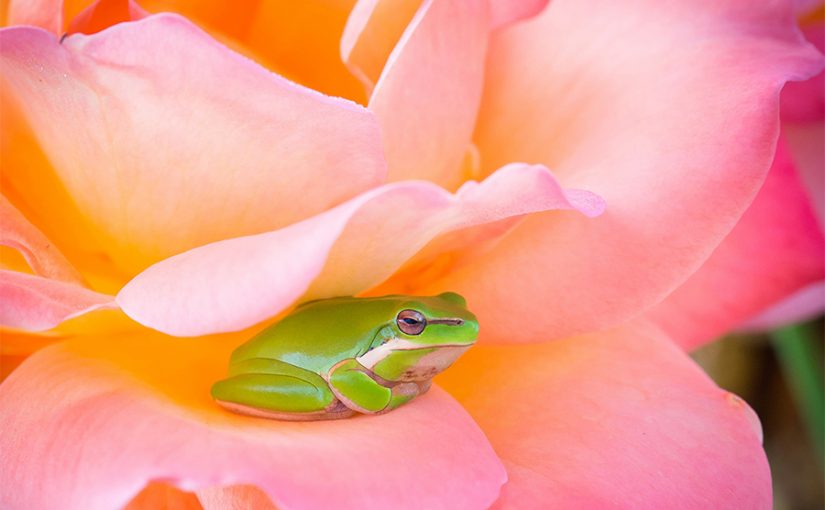
It’s not that easy being green;
Having to spend each day the color of the leaves.
When I think it could be nicer being red, or yellow or gold —
or something much more colorful like that.
It’s not easy being green.
It seems you blend in with so many other ordinary things.
And people tend to pass you over ’cause you’re not standing out like flashy sparkles in the water —
or stars in the sky.
But green’s the color of Spring.
And green can be cool and friendly-like.
And green can be big like an ocean, or important like a mountain, or tall like a tree.
When green is all there is to be
It could make you wonder why, but why wonder why?
Wonder, I am green and it’ll do fine, it’s beautiful!
And I think it’s what I want to be.
Kermit the Frog
Jim Henson’s greatest character lamented blending in, being invisible, being ignored in and by a hurlyburly world. Fortunately for us, and for everyone everywhere, Kermit became vividly visible.
Our challenge in being green, or purple, or Black, or White, or any rainbow hue, is that our lives, lived as Christ commands us, will — and should — attract attention amid that same Earthly chaos. We’re not supposed to blend in.
And it’s not that easy.
Today’s three passages from Scripture have a bleak edge. A woe-is-me tone, with a coating of acceptance of a Damoclean fate. A hitch-up-your-britches message in Matthew’s Gospel for anyone who wants to follow the rabbi from Nazareth, or at least buy some of what he’s selling.
This message arrives after Jeremiah describes a pool of tears that started filling millennia before the birth in Bethlehem.
Bleak words then, bleak words now … yet strangely hopeful, if we take a moment to see past the clouds for the light of the message.
Because we are called to spread the hope within that message.
We are called to be countercultural in an era of greed, pain, and anger. We are called to still the winds of hot air, to calm the waves of hatred, to listen when the shouts are deafening and maddening, and to speak and act with kindness.
We are called to throw the fireproof blanket of charity and justice over the flames of hate.
God forbid! We are called to love our enemies, to love our neighbors, to love ourselves, and, oh yes, to love God who gave us the ability to love in the first place. And who gave us everything — EVERYTHING — else.
Now, in this mostly beautiful world God gave us, ill winds do blow (to borrow a phrase, as I so often do). The stench of intolerance, of disrespect, of ignorance and closed-mindedness wafts on those winds like a bad day on the Turnpike near Bayway.
It chokes us.
Unless we prepare for it.
With God’s help, we can, and we do.
Jesus said to his disciples, “Whoever wishes to come after me must deny himself, take up [their] cross, and follow me….”
Oh, wait: the cross again? Really?
And then we look deeper.
Not Jesus’s cross. Our crosses. Our unique bespoke crosses. The crosses that came with the jacket and two pairs of pants or the school uniform.
The crosses that make us truly human and truly children of God and, especially, members of one worldwide family. We have the DNA tests to prove it.
Shouldering a cross, with or without a Simon of Cyrene of our own, prods us to keep moving forward. We have to. If we try to slide backward, the big stick jams into the ground and we stop. We fall. The cross flattens us.
Our only option is progress.
Our uniqueness, our gifts and talents and individual intellects give us the strength and the determination to face the winds that would force us back into a world that represses anyone who isn’t the same shade of green as we are in some aspect of our lives.
We can conquer any ill winds the 21st-century world blasts at us.
And, no, it’s not that easy.
But it’s beautiful, and it’s what Our Lord wants us to be.
