A homily for the Fifth Sunday in Ordinary Time, February 8, 2026
Isaiah 58:7-10, 1 Corinthians 2:1-5, Matthew 5:13-16
A few weeks ago, just as Jack Frost started to flex his icy tentacles, the big story in the news was the shortage of salt.
After years of mild winters, many towns’ stockpiles of road salt ran low or completely out. And because recent demand for rock salt had been so-so, several suppliers had cut back on production. It didn’t make sense to manufacture stuff nobody was buying.
Then — whoosh! — the polar vortex and below-zero wind-chill factors and cross-country monster snow-and-ice storms came roaring down from The Great White North. And many of us weren’t getting out of our driveways onto streets that were barely passable anyway.
When we did, we found ourselves at the end of lines at hardware stores that announced they’d just received a shipment of ice melter. Which sold out in minutes. Often while we were still in line, hoping. Sigh.
Salt has a lot more going for it than flavor.
Salt melts ice, and it’s a natural antifreeze. Salt has been used as a food preservative throughout human history. Saltwater increases buoyancy; tourists at the Great Salt Lake love to show off how easily they float.
Saline solutions irrigate wounds and provide intravenous hydration. Mineral solutions such as epsom salts help muscles heal and rejuvenate.
Some people spend a fortune to visit spas and sit in Himalayan pink-salt vaults. Others buy pink-salt lamps because a spa trip ain’t in the budget this year (or any year).
And a movie with unsalted popcorn? Is that even possible?
Yeah, salt is good stuff.
And we should strive to live as the salt of the Earth. As good stuff, the way God made us.
But we have to do it right, because like many good things, salt also has detrimental effects.
Too much salt in food can lead to high blood pressure, heart attacks and strokes. Too much salt, or the wrong kind of salt, in a wound will burn raw flesh. Too much salt on the road can wash into rivers and streams, poisoning freshwater fish. Salty water and salt air speed up rust and corrosion; check out subsea images of shipwrecks or the girders at the Asbury Park Casino.
And Old Testament stories and ancient histories tell of warriors spreading salt on lands they conquered so that no crops could grow again.
Not good stuff.
But the yin and yang of salt give us a superb metaphor for our lives, especially in this contentious 21st-century homeland of ours.
Take charity and justice, for example. Any number of maxims apply: We can save someone from drowning in the river (charity) or we can go upstream and stop people from falling in (justice). Give someone a fish and they eat for a day (charity) or teach them how to fish and they eat for a lifetime (justice and empowerment). A handout (charity) or a hand up (justice, empowerment and human dignity).
To be sure, as the salt of the Earth, we are called to practice charity and justice. As the salt of the Earth, as people of grace and wisdom, we’ll recognize when and where either or both is needed. And with grace and wisdom, we’ll know what we can provide according to our unique gifts.
Then there’s the matter of respect.
Do we season our words carefully, gently, with truth but no malice? Do we give anyone a reason to think they have to take what we’re saying with a grain of salt? Do we listen, really listen, to our fellow travelers with different perspectives and opinions, especially when those views have been shaped by others’ circumstances we’ve never experienced?
Do we use salty language to shock others? To win the wrong kinds of friends?
When other people are down, do we rub salt in their wounds?
Not good stuff.
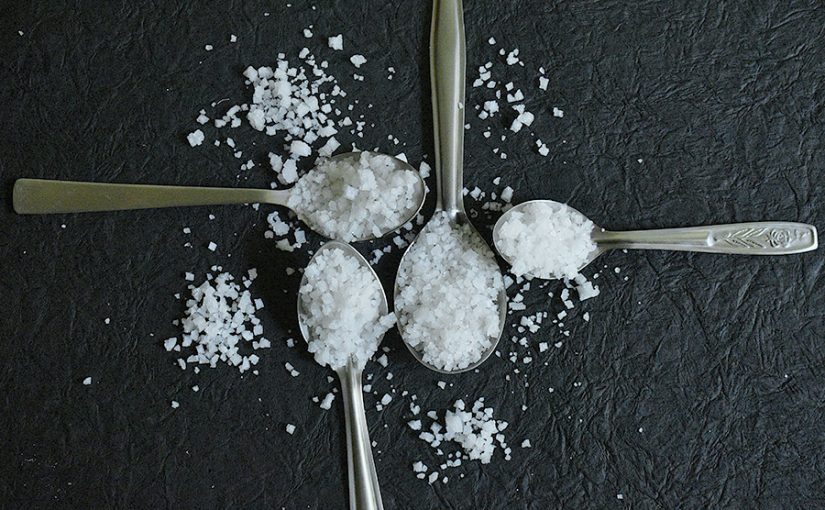
One cube-shaped grain of table salt. One flake of pretzel salt. One crystal of rock salt.
They’re tiny, almost insignificant, easily forgotten and taken for granted.
Yet they’re indispensable, and even more so when they’re in short supply, literally and metaphorically.
Jesus calls us to be the salt of the Earth, and we’re obliged to keep the cellars full.

Thank you for sending this pearl of wisdom!! Jesus calls us to love. Reminding us we are a family in Christ Too much of a good thing especially when used for the wrong reasons is simply toxic Christianity or political views as weapons are far from Christ like. The litmus test.. Keep it simple What would Jesus do ?What would Jesus say ? If it doesn’t fit it’s likely worth reconsideration
Hopefully you are staying warm