Tempus fugit

The Ford dump truck was long past retirement, as probably was the shotgun passenger.

The July sun was searing the young man and the grizzled laborer through a hole in the truck’s cab’s roof, first punched there by misloaded rocks or asphalt and then widened by rust.

We’d finished a job that morning on the southern end of Monmouth County and we were expected at another site, about 20 miles away, after lunch.

We’d grabbed lunch at a local gin mill; for me, it was the $1.25 forgettable special and a short whatever was on tap and cheap, and for my partner du jour it was a shot with three tall ones as chasers. Obviously, not a sandwich or blue plate guy.

As soon as he’d tossed back draft No. 3, I hustled him into the truck and fired it up, using our size to muscle into back-to-work traffic.

“Hey, I didn’t get my full half-hour,” he growled, to which I replied, “We gotta get to Oceanport.”

“We’re on the clock, kid.”

I agreed with the assertion, not realizing at the time we actually were poles apart.

“We’re on the clock, kid.” To him, it meant slow down, we’re getting paid while we crawl up Route 36, the boss should be happy we’re taking his money, the boss should be happy we deign to punch his time clock.

“We’re on the clock, kid.” To me, it meant we’re getting paid for what we produce, that otherwise we’re taking the boss’s money with nothing to show for it.

I’ve not had to punch a clock or fill out a time sheet for all but four non-contiguous years of my career; I’ve been “exempt” in nearly all my roles as a journalist. The task’s size and complexity — and deadline; always a deadline! — dictated the clock.

Maybe it was my upbringing. Dad stayed at his office until every patient had been cared for.

Maybe it’s my temperament. I want to see the finished product, the completed task, which made news a perfect career: There’s always something to see and touch at deadline, whether it’s a complete newspaper or a digital post.

It’s probably why I don’t start certain projects I know will need multiple sessions to finish. I don’t always like to do but I thoroughly enjoy having done.

And I concede the anti-capitalists’ point that anything I produce belongs to the company, but I still get a sense of accomplishment. That’s mine.

We’re on the clock? Perhaps, but I don’t watch it.

AI ay yi yi

On one hand, Facebook’s facial-recognition software makes tagging people in photos easier, makes gathering your friends closer to you a snap.

Look! It knows that’s Tom! Hey, it tagged Pat and Kyle and I didn’t have to do a thing!

On the other hand, when the artificial intelligence is more artificial than intelligent, it’s at best humorous and at worst insulting.

Every now and then, I get a notification that one friend or another — or, more amusingly, someone who turns out to be a friend of a friend of a friend of a friend — has included me in a post. Sometimes I’m tipped that they’ve included a photo of me. Which, at six degrees of separation or more, seems an odd thing for that person to do.

Except the image is not of me.

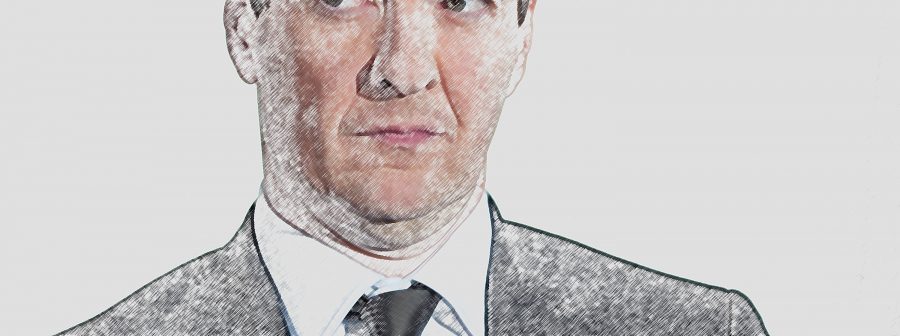
As of this writing, FB has 21 images of #45 that FB’s AI has tagged “Bill Zapcic.” Here’s an example:

I don’t like either of their acts.

Maybe it’s the bags under his eyes, or the squint; I, alas, have them too.

Nose? Pursed lips? Dunno.

Last I looked, I have whiskers and bluer eyes. When I smile, it’s not a stage direction on the TelePrompTer.

And what goes around doesn’t seem to come around. When Charles Apple posted a photo of me on my birthday (thank you, Chas!), FB AI didn’t tag it as #45.

Must be the Deep State, or the Secret Service.

Time to cull

A homily for the First Sunday of Advent, Dec. 2, 2018

Every house has one.

Maybe it’s a drawer in the kitchen, or a cabinet or cubby.

Perhaps it’s a shed or a garage or an entire basement.

But no matter what form it takes, every house has one, at least one.

It’s where we stash our stuff.

Sometimes we call our stuff “junk,” as in, “Check the Junk Drawer.”

Junk or stuff, everything we’ve stashed is valuable, critically needed, can’t do without it.

Or, at least, it was when we first got it.

How many times have you gone to The Home Depot to get a refrigerator bulb and had to buy two, because that item came only in a multi-pack?

The fridge only needed one, so what did you do with the other one?

Junk Drawer.

And we all know that anything that goes into the Junk Drawer hides when we need to fish it out. That bulb? I swear it was in there. Oh well, I’ll go buy another.

This time, of course, the multi-pack is a three-fer, not a two-fer, so even more can get lost in the Bermuda Triangle.

Sometimes we find that bulb after we’ve replaced the refrigerator, and the new one doesn’t take that size.

But do we throw it out? Nooooo, because it’s a perfectly good bulb and we might find a use for it and anyway that would be wasteful.

We never clean out junk drawers or basements or garages. It takes an act of God or an oil spill to get us to excavate.

Junk or stuff, everything we’ve stashed is valuable, critically needed, can’t do without it, remember?

This rule also applies to faded, threadbare T-shirts from concerts in 1978, varsity jackets from 1975, air and oil filters for a 1998 Escort wagon, and dozens of 1157-A taillight bulbs.

We cling to these things the way Andy clung to Woody in the “Toy Story” movies.

St. Paul had some thoughts on this.

In the 13th chapter of his first letter to the Corinthians – the scripture we know best for its “love is patient, love is kind” wisdom – St. Paul talks about maturing:

When I was a child, I used to talk as a child, think as a child, reason as a child; when I became a man, I put aside childish things.

When we put aside childish things of this world, material things like toys and clothes and stuff, where are we putting them? Are we giving them to someone who needs them, if they’re still useful? Are we tossing them in the trash if they’re not? Are we putting them in a scrapbook or hope chest to preserve them as souvenirs?

Or are we stashing them in the Junk Drawer in hopes we can use them again?

Hmmm.

Do our lives have spiritual Junk Drawers?

Because, you know, when we speak of childish things the way Paul did, we’re not talking about Mr. Potato Head.

First and foremost, we’re talking about habits, things we do almost without thinking or actively choosing. We’re looking at the way we interact with the divine, with how we follow God’s Law of Love: because, when we were children, somebody told us to do this and not that. Rote memorization of the Catechism. Blind obedience of the Commandments.

A good start. But only a start.

When we put aside childish things, we begin to examine the current state of our relationship with our living, loving God.

We ask if we’ve matured in our personal covenant with our Creator. Or if this “Being a Catholic” thing is a habit Sister Fleurette or our CCD teacher drilled into us.

If it’s merely a habit, if we’re sleepwalking and not actively, intellectually and emotionally embracing the faith, then Paul has some advice.

As we use this Advent season to prepare to sing “Glory to the Newborn King,” here are some questions we should ask ourselves. Depending on how we answer, we should be able to figure out the “what’s next.”

Do we pray? How often? How?

Do we treat God as a lifeline, as a utility belt, as a tool we carry around in our pocket in case we need him but one we forget about when we don’t?

Do we dedicate our activities – work, play, leisure – to God, who gave us the life, the abilities, the opportunities we have?

(Here’s some homework, and there will be a test: If you don’t already know, please look up AMDG and let me know what it means and how it applies to Advent and every day.)

Do we see Christ in the least among us: those in obvious need of life’s necessities such as food, shelter and clothing as the weather turns cold, as well as those with subtler needs, those marginalized because of race, country of origin, different abilities, who they love?

Will we be counted among the sheep or the goats when Jesus judges the multitudes?

Do we want to clean out the Junk Drawer filled with our spiritually childish things, and now and forever have a mature relationship with the Trinity?

God, who is Love, has open arms.

… than to curse the darkness

The nighttime images from space of North Korea uniformly show the hermit nation as dark — bleak, even — an island of black surrounded by a sea of light.

No night lights. I hope no one is afraid of the dark.

Among Christian families, this time of the year — Thanksgiving or St. Nicholas Day until Christmas or New Year’s — is the season of lights, often lights so bright they’re visible in the International Space Station. For other believers, Diwali ended recently, and Hanukkah is almost here. And then there’s Kwanzaa, among a multitude of festivals of light.

We need light.

We need light on so, so many levels.

From a practical standpoint, at this latitude in late fall and throughout the winter, the shorter days compress our to-do lists. Wind chill bites those agendas as well.

From a psychological-physical standpoint, folks nipped by Seasonal Affective Disorder are feeling the Not Enough Blue Skies Blues. As if crass Xmas commercialism and the incessant ads for Medicare supplement insurance policies weren’t enough….

And then there’s our fundamental human need for hope.

Whether we’ve found ourselves in the Psalm 23 valley or marching through hell, we know, in our fiber, that better days are ahead if we seek the light. If we follow the star.

As far back as I can remember, we decorated our home with Christmas lights. My childhood home was the same as everybody else’s in the development: multicolored C-9 incandescent teardrops hung from brass cup hooks on soffits and roof peaks, plugged in by hand at sundown and unplugged by the last person to head off to bed (unless he — always a he — forgot).

We used fewer lights during energy crisis years, and added more in good times. Tiny incandescents replaced big bulbs; dangling icicle effects succeeded simple strings. These days, LEDs rule.

Some neighbors go all out with illuminated inflatables; others with insane amounts of computo-electrono-engineering skills (and stock in the power company) put on a TSO light show I could only dream about while a theater student.

It matters not if you’re religious or a humanist.

Light brings hope.

Hope brings joy.

Joy engenders peace.

Let there be light.

Hyperbolic

“To gild refined gold, to paint the lily, to throw a perfume on the violet, to smooth the ice, or add another hue unto the rainbow, or with taper-light to seek the beauteous eye of heaven to garnish, is wasteful and ridiculous excess.”

When is carnage necessary? When does a tragedy make sense?

Every time a TV or radio newscaster — or, all too often, a spokesman for law enforcement or first responders — says “this senseless tragedy,” it implies that some tragedies occur logically, that some thefts of precious life were necessary.
Melodrama adds to the numbing of America. Mark Twain had little use for excess adjectives, and his wisdom is all the more valid today.
Murder.
Rape.
Abduction.
Abuse.
Of course, senseless.
Of course, unnecessary.
Of course, (choose your hackneyed adjective).
But look at those words. Hear them in your head. Feel the chill, the anger, the sadness. They need no modifying.
The more we sugar- or mud-coat these terms that pierce our hearts, the more we blunt their power to move us.
If we do not move, we do not act. Instead, we think and we pray.

Nuns, monks wear them well

Scientists love to debate how long it takes to form a habit and then break it. Three weeks to make it, three months to unmake it. Five unstructured years to lock it in, five motivated days to abandon it.

What’s clear is, habits based on a daily routine are the hardest to ditch. They become mooring stones, and we attach ourselves to them emotionally as well as physically. They become part of our identity; in fact, they almost have identities of their own.

When they’re broken abruptly, when the activities they involved are taken from us, it’s like a death in the family, and we mourn. Elisabeth Kubler-Ross, DABDA and all that.

Continue reading Nuns, monks wear them well

Belgian waffles

There are places I’ll remember
All my life, though some have changed
Some forever, not for better
Some have gone and some remain
All these places have their moments
With lovers and friends I still can recall
Some are dead and some are living
In my life, I’ve loved them all
© Lennon-McCartney
T-shirts are scrapbooks for people of a certain vintage. This concert or that festival. Water parks. Theme parks. Central parks in cities in every latitude and longitude. Charity walks or runs. Three for $10 airport specials.
 
Successfully eating a XXL pizza in Neptune City NJ.
 
Pieces of my life in cotton or cotton-poly lurk in my basement. Many, too many of them, yet I can’t bring myself to ditch them or donate them. It’s as if they have stories yet to tell.
 
Even tougher to cull are the tchotchkes.
 
Physical souvenirs are great for stirring memories, jogging memories, sometimes rousing memories that may be better left dormant. Songs, too, can have those effects.
 
Ah, reveries.
 
What’s fascinating, though, is pausing to ask where — from whom — did we get certain habits, certain tics, certain inflections or quirky pronunciations, even certain recipes or food-prep techniques.
 
Those are a whole nuther class of souvenir, and those are woven deep into our lives.
 
Sue taught me how to fold fitted sheets, and how to cook my french toast: crisp, with vanilla and little or no cinnamon. She lost her battle 15 years ago, but she lives every time I get out the frying pan.
 
For some odd reason, playing computer solitaire — Klondike by threes — resurrects Renee, gone four years. I can’t recall ever having a pack of cards or a PC screen alongside her, yet there she is.
 
Though I’ve learned to crack eggs one-handedly, I mostly do this half-shell-in-each-hand up-down action that mimics a railroad handcar. I know exactly from whom I learned that.
 
More often than not, mowing the lawn gets a mental serenade of  “Pleasant Valley Sunday.” Hmm: weekend squire? TV in every room?
 
I traveled for business extensively a few years ago, and the survival technique I employed while bunking at this Hampton Inn or that for weeks at a time was to establish a routine straight away. I learned the daily breakfast cycle — what days the blechh omelet foldovers were served, what days the funky but tasty maple sausage came out. What days were oatmeals and eggs, what days deserved a trip to the flip-over waffle maker.
 
In “Forrest Gump,” as Jenny listens to Forrest’s stories about his cross-country run, she tells him, “I wish I could have been there.” “You were,” he replies.
 
In living every day, at home, away from home, the rhythms of our relationships sustain us.
 
Familiarity gets a bum rap. Home is where the habits are, and habits come from places in the heart.

Faux foe

Phobias seem to come in two flavors.

Some are learned, historical: An attack by a dog leads to fear of dogs. And that makes perfect sense. If a possible outcome to a situational experience is already known, you’ll avoid that situation. Lightning can and does strike the same place frequently.

That type of behavioral adaptation could be considered prudent, in fact.

Other phobias, though, seem pre-wired into some of us. It’s possible they’re learned, but I can’t see how.

These are the ones that make you feel all squishy inside, or the way you feel after an electric shock. Tingly, wishing you could shake it off the way a Labrador shakes off water.

These are the ones that make no sense. They lurk in the back of the brain and jump out like a bad Halloween scare. And because they are mostly dormant, you don’t modify anything in your life until they hit you. And then — again — it takes a while to shake them.

Walking too close to a bridge railing gives me the feeling that something will pull me in. Well, maybe not pull me in, but I feel as if something will compel me to go over the side. So I walk — and drive — toward the middle whenever I can.

Yet I have no measurable fear of heights.

Then there’s trypophobia. Items such as lotus pods with little blisters and eyeball-like seeds give me the heebie-jeebies for no discernible reason. They just do.

Phobias such as this can paralyze you, if you opt to be hyper-aware, if you see monsters under the bed. Especially ones with a zillion eyes.

I can’t say I’ve ever been paralyzed by fear of the things, and it didn’t take much effort to avoid them years ago when I worked for the florist. 

Nonetheless, phobias that make no sense can trick you into dwelling on them. And then they win. Ugh.

Some phobias can’t be beaten, only dealt with. An uneasy truce, with a DMZ if you’re lucky. If ever there were a “know thine enemy” situation, it would be fear itself, to coin a phrase.

The greater challenge is knowing yourself, skills and all, fears and all, to ensure that every day you choose to be your best self, and give yourself to a world that needs your contributions.